








Buying shoes online used to feel like gambling because two pairs stamped EU 42 sit completely differently around the toe box, while smooth foam soles that glide effortlessly inside mall corridors turn dangerously slick the second Ashar rain washes over stone steps around Patan or mossy slopes in Pokhara. Add rough gravel sidewalks, long bus stand waits, and sudden afternoon downpours, and everyday footwear in Nepal faces tougher mixed conditions than most fashion catalogs ever test for.
When shopping Stride House and specialty footwear sellers across Kinzo, paying attention to centimeter foot-length sizing, rubber outsole compound vs exposed EVA foam, gusseted tongues, and practical monsoon drying routines turns online shoe ordering from guesswork into an exact fit every time.
Key Takeaways
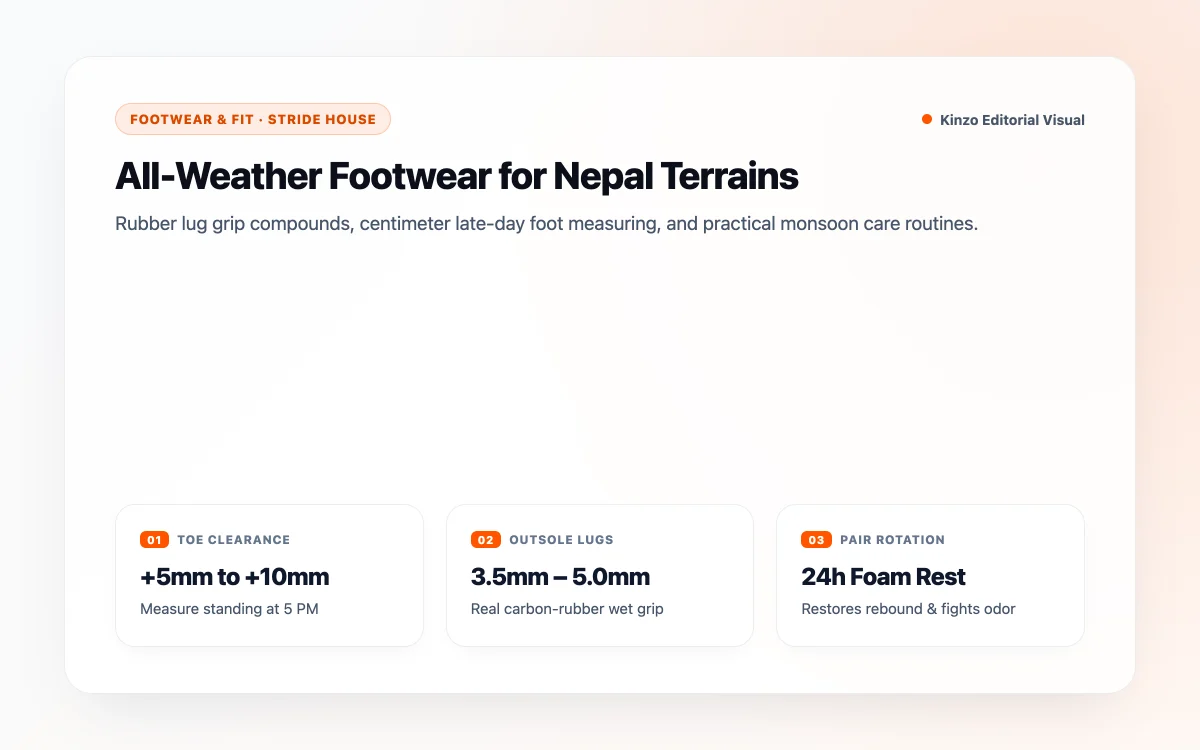
- Measure heel-to-longest-toe in millimeters, never trust stamped US/UK/EU numbers blindly: Evening foot swell after standing adds up to 4mm; always measure late afternoon standing flat on paper.
- Look for full carbon-rubber tread sheets beneath foam midsoles: Exposed soft white EVA foam erodes rapidly on abrasive brick footpaths and hydroplanes on wet marble.
- Reserve coated mesh or sealed leather for monsoon walks: Pure open-knit mesh stays wonderfully breezy from March to May yet drinks road puddles instantaneously without water-repellent uppers.
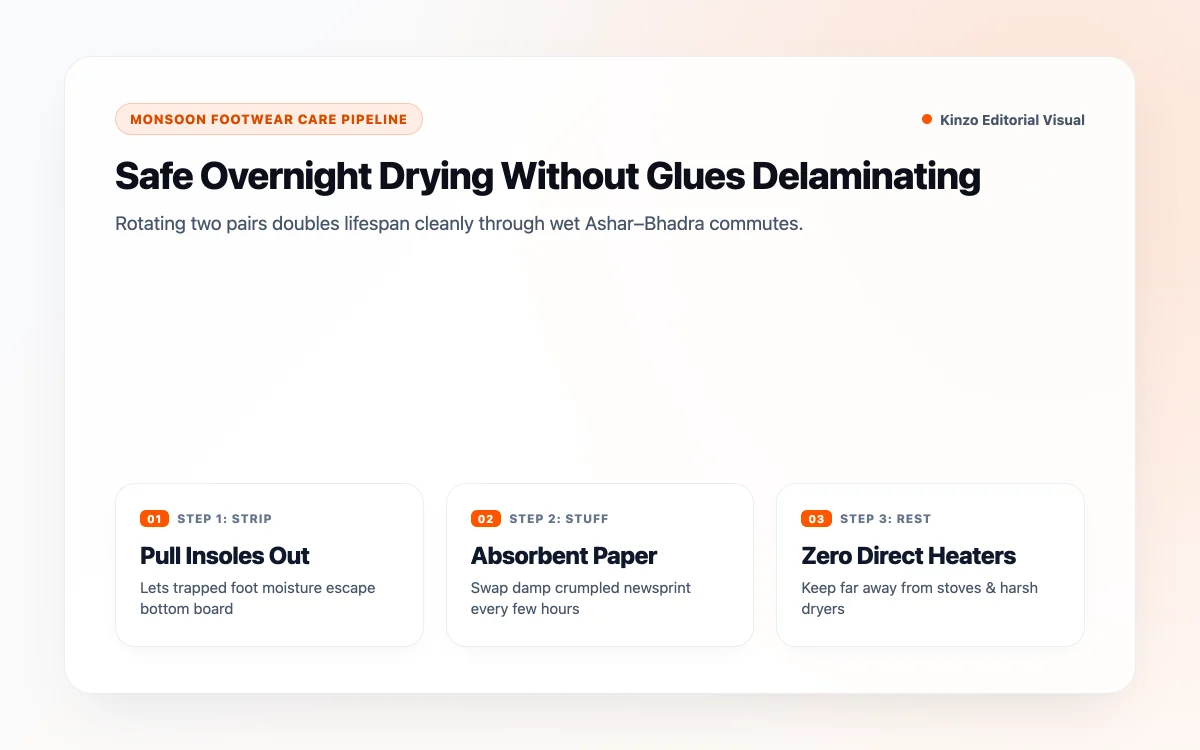
- Dry soaked shoes gently with crumpled newsprint indoors—never next to electric heaters: Direct stove heat warps glues and cracks synthetic leather collars overnight.
Why Measuring Centimeters Beats Guessing US or EU Numbers
Footwear brands lack a universal global size mold: one label’s EU 42 runs 26.5cm inside the footbed while another cuts narrow at 26.0cm with a tapered almond toe box that pinches wider South Asian forefeet. Whenever browsing footwear product variations on Kinzo, check the seller’s **CM / Mondopoint measurement table** first.
How to Measure Your Exact Foot Profile at Home
- Stand barefoot with your heel lightly touching a flat wall on uncarpeted tile at **5 PM** (when natural daily walking slight swelling peaks), wearing the sock thickness you actually plan to use.
- Mark just ahead of the longest toe—often the second toe rather than the big toe—and measure cleanly in millimeters.
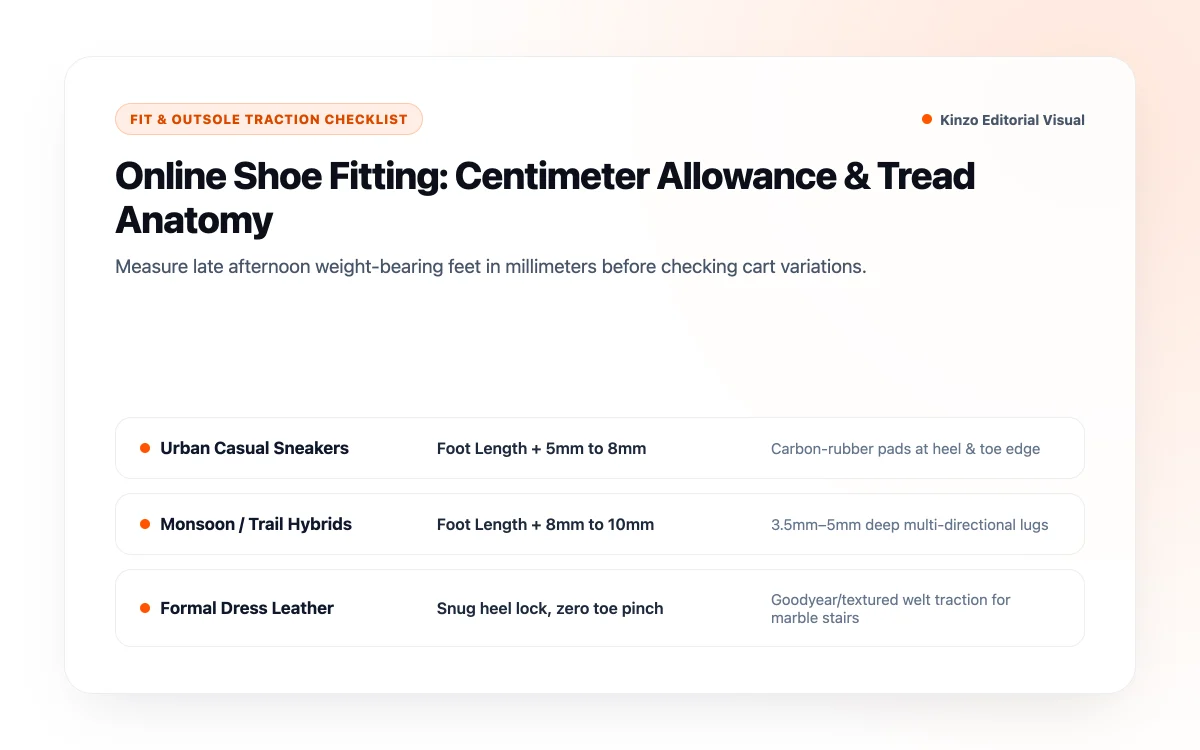
- Add **5mm to 8mm breathing space** for casual sneakers, or **10mm full thumb’s width** for downhill trail hikers or long-distance running shoes so toenails avoid jamming the front cap on steep descents.
Daily Sneakers vs Treated Trail Hybrids vs Formal Slip-Ons
| Footwear Category | Midsole & Outsole Build | Monsoon & Terrain Readiness | Ideal Daily Rotation |
|---|---|---|---|
| Engineered Knit Lifestyle Sneakers | Lightweight molded EVA + targeted rubber pads | Dry spring & dusty clear days; cool breeze flow | Campus walks, dry office commutes, gym floors |
| Ripstop / Coated Trail Hybrids | Firmer dual-density cushion + 3.5mm–5mm deep lugs | Wet stone steps, unpaved alleys, weekend hill trails | Rainy-season daily commuters, inter-district travel |
| Full-Grain / Sealed Leather Loafers & Boots | Goodyear or durable cemented traction welt | Handles cold mornings & light splashes when conditioned | Formal workwear, crisp autumn/winter evenings |
Upper Fabrics, Toe Caps, and Waterproofing Reality
Shoppers often assume "water-resistant" means wading ankle-deep through monsoon street drainage safely. In reality, treated ripstop nylon and DWR-coated mesh shed light rain droplets and wet grass cleanly during brisk commutes, whereas deep standing water will always seep down over ankle collars or around loosely laced gussets.
Check whether sneaker tongues feature **half-gusset webbing** stitching halfway up the sides—this invisible detail keeps sandy gravel dust and shallow splash droplets out along noisy intersections. Meanwhile, stitched synthetic leather toe mudguards prevent sharp curb scuffs from tearing delicate woven mesh right over your big toe within sixty days.
Heel Counters, Midsole Cushion Recovery, and Insole Care
Long urban commutes punish midsole foam far harder than people realize. Beneath soft cushioned heel zones sits closed-cell EVA or polyurethane foam designed to compress gently on heel impact and rebound cleanly before your next stride. Cheap single-layer sponge inserts flatten permanently inside sixty days, passing hard stone vibration straight through heels into tired shins and lower knees by Thursday evening. Gently press your thumb against the heel collar counter and inside midsole wall before keeping online pairs: sturdy thermoplastic heel cups support ankle alignment smoothly over rough gravel camber without twisting awkwardly sideways on uneven flagstones.
Online Fit Exchanges and What to Inspect First on Delivery
Walking through crisp apartment tiles cleanly inside Stride House deliveries lets you inspect stitch density and sole glue lines inside three minutes cleanly without voiding eligibility. Check right around the toe flex crease—both shoes should bend smoothly across the forefoot ball rather than kinking stiffly over delicate toenail joints, and zero dry excess amber glue smudges should bubble out where rubber outsoles join knit quarters. If an arch strap rubs slightly tight around thick mid-foot insteps, test unlacing through wide skip-lacing patterns across the fourth eyelet before jumping automatically up a size length—sometimes freeing top instep lace volume creates a custom-feeling cradle with perfect toe length.
Two-Pair Rotation and Smart Monsoon Maintenance
Rotating two sensible pairs beats beating one expensive pair into early landfill every nine months. Alternate dry lightweight sneakers with one darker tread-heavy rainy-day pair so compressed EVA foam recovers elasticity between wears (giving insoles 24 hours of air time eliminates lingering odor dramatically better than chemical sprays).
- Never tumble dry or bake beside heaters: Pull out removable foam insoles, unlace wide, and stuff plain absorbent newspaper inside the toe box overnight—swap damp paper once before morning.
- Brush dried mud gently off lug grooves: Grit trapped inside flex creases acts like sandpaper across textile weaves with every step.
- Inspect heel counters before leaving checkout reviews: Gentle thumb pressure along the rear heel cup should hold structure rather than folding flat—a quick sign of reliable ankle alignment support.
Sock Fabrics and Blister Prevention on Steep Pavement
Even a perfectly fitted pair of sneakers causes stinging hot spots if paired with thin stretched low-cut cotton socks that bunch noisily behind damp heels during brisk climbs. Swapping bargain cotton packs out for cushioned arch-compression nylon-cotton crew or merino-blend socks stabilizes subtle inside-shoe slip cleanly while wicking midday warmth away from toes before chafing blisters ever start. Watch tongue thickness and padded collar lips too: double-checking reinforced rear pull-tabs and rust-proof coated lace eyelets pays off over two wet years because nothing frustrates morning departures faster than oxidized metal hooks snapping stiff strings five minutes before catching an office bus.
When to Retire Worn Outsoles and Replace Insoles
Shoes often look totally respectable along crisp fabric uppers months after concealed cushioning cells collapse internally underneath heel strikes. Watch two quiet wear signals before lower back aches creep into weekend errands: flip your daily commuters upside down quarterly to check if one outer heel edge has ground unevenly smooth through black carbon rubber straight down into white foam, and feel with flat fingertips inside removable insoles whether heel pits stay permanently compressed paper-thin after sitting idle for a day. Dropping fresh arch-support PU replacement footbeds cleanly inside structurally sound boots rescues six extra months of crisp shock absorption sustainably without buying completely fresh footwear prematurely.
Key Facts at a Glance
Bottom Line & Summary
Great footwear disappears underfoot from day one when chosen by millimeter measurements and true rubber outsole coverage rather than hyped logos. Match breathable open knits to sunny commutes, trust reinforced ripstop and deeper rubber lugs across unpredictable monsoons and paved inclines, and confirm size exchanges cleanly on Stride House listings across Kinzo by trying every fresh delivery indoors on clean carpets before wearing them outdoors.