







Travel across Nepal frequently flips climates inside four hours. Step off a bus or short flight in Bhairahawa wearing a warm winter hoodie and you start sweating before leaving the gate; ride twenty minutes up winding hills toward Nagarkot, Bandipur, or Mustang after sunset with nothing heavier than a cotton jersey and wind cuts cleanly right through thin ribs. Even everyday office workers commuting on motorbikes at 7 AM in November face brisk 10°C morning gusts before sitting inside sunlit 23°C glass offices all afternoon.
Packing light or dressing comfortably without carrying two suitcases full of heavy parkas comes down to choosing breathable fabric GSM weights and building a genuine three-layer wardrobe using modular pieces found across Urban Thread, Carryon, and Stowell storefronts on Kinzo.
Key Takeaways
- Three smart interchangeable layers crush one massive winter parka: Combining a dry base tee, warm mid-weight knit or fleece, and thin wind-blocking outer shell adapts cleanly from 8°C dawn rides to 26°C sunny terraces.
- Beware heavyweight 100% cotton during mountain drizzle or steep walks: Thick cotton holds sweat against ribs for hours; blends with merino, lightweight bamboo-viscose, or textured open-weave linen dry dramatically faster.
- Watch carry-on bag tare weight before filling clothes: A rigid empty polycarbonate trolley can burn 3.2kg before packing one sock; soft-sided ripstop carry-on packs (like Carryon & Stowell styles) reclaim precious domestic airline allowance.
- Sort small gear using slim compression cubes by function, not outfit: Grouping cables, rain covers, base layers, and toiletries avoids tearing open your entire suitcase beside hotel lobbies.
Why Multi-Climate Dressing Relies on Air Trapping, Not Bulk
Warmth comes mostly from still pockets of air warmed cleanly by your body heat—not sheer garment mass. A stiff heavy coat stops ventilating the moment you step onto a crowded microbus or indoor restaurant, leaving skin clammy underneath; as soon as you step back into chill evening breeze, trapped sweat cools fast.
Modern capsule dressing avoids that rollercoaster by separating moisture transfer from insulation and wind stopping:
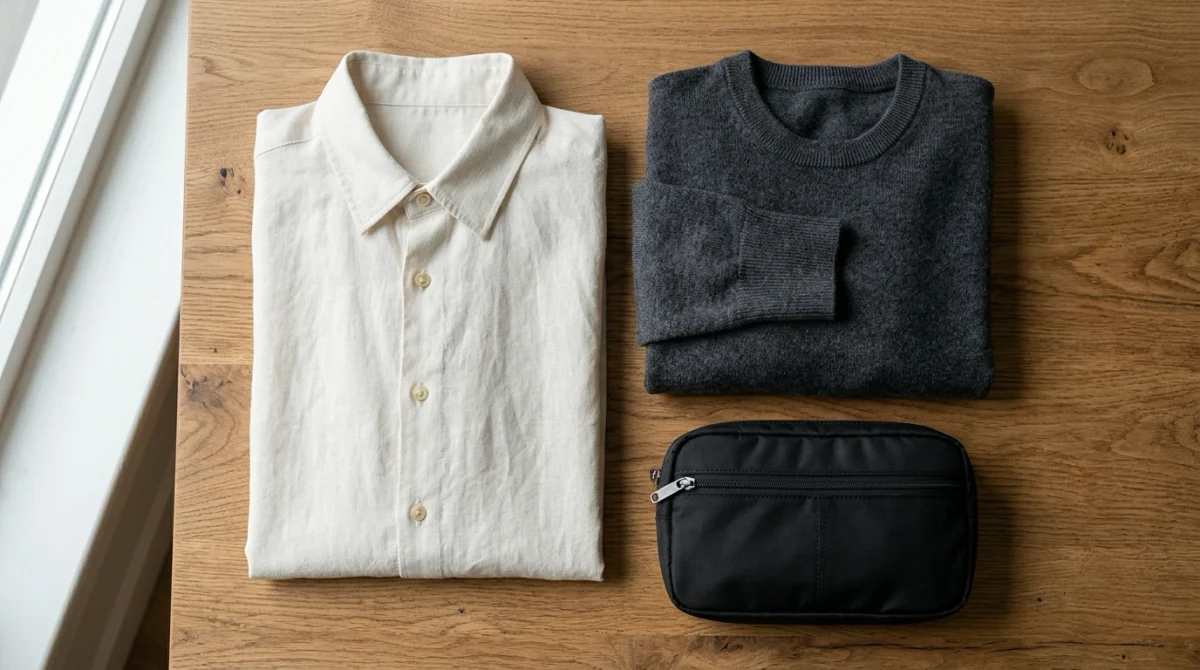
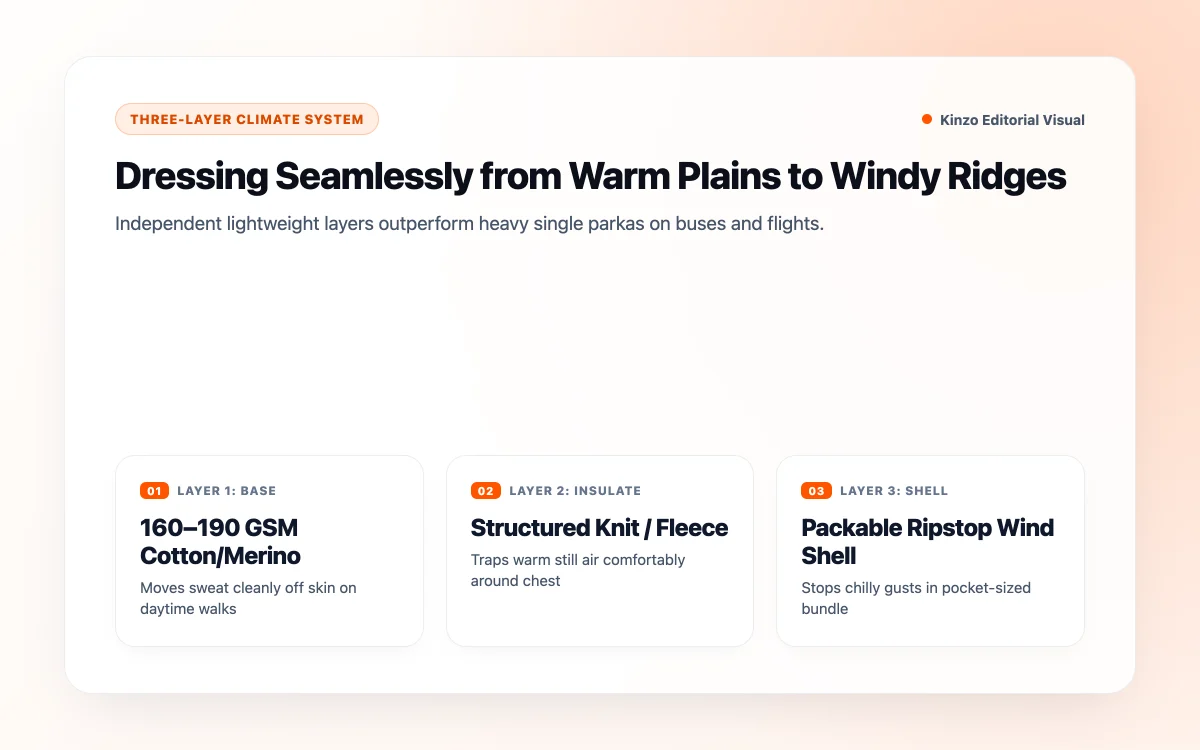
- Layer 1 (Base Moisture Control): Close-fitting 150–170 GSM breathable combed cotton-modal, linen-cotton summer shirts, or thin merino base layers pull morning warmth smoothly off skin.
- Layer 2 (Trapped Loft Insulation): A structured heather wool crewneck, clean microfleece half-zip, or packable quilted vest holds dead air gently around chest organs without choking elbow mobility.
- Layer 3 (Wind & Mist Barrier): A compact water-repellent ripstop windbreaker stops fast chill from stripping Layer 2’s trapped pocket heat—turning an otherwise light pullover instantly warm on evening ridge trails.
Luggage, Fabrics, and Weather Trade-offs Compared
| Fabric / Bag Choice | Warm Terai Humidity Fit | Chilly Hill Evening Fit | Carry-On Weight & Wrinkle Recovery |
|---|---|---|---|
| Cotton-Linen Blend (140–180 GSM) | Outstanding airflow; sheds sticky sweat rapidly | Clean under crisp mid-layer overshirts | Compact fold; gentle finger mist erases travel creases fast |
| Fine Merino / Wool-Acrylic Blend Knit | Breathable in mild evenings without clamminess | Keeps core snug even during misty mountain breeze | Naturally resists multi-day odor; rolls effortlessly |
| DWR Ripstop Shell / Packable Jacket | Ventilates well with unzipped front during rain bursts | Stops bitter windchill instantly over light knits | Compresses into size of a coffee mug inside backpacks |
| Polyester Canvas Daypack / Soft Cabin Carryon | Abrasion-safe across dusty bus trunks | Stands resiliently against slick road grime | Under 1.6kg tare leaving huge cabin weight headroom |
GSM Fabric Weight Cheat Sheet When Ordering Apparel Online
Since online fashion photography rarely lets your thumb pinch fabric thickness before ordering, learning two numbers—**GSM (grams per square meter)** and fiber blend percentages—protects you from receiving paper-thin see-through shirts or suffocating heavy polyester.
Everyday crisp summer tees usually hit **160–185 GSM**; sturdy structured casual tees and polo shirts sit neatly around **210–240 GSM** where collars keep neat shape after twenty washes. Lightweight summer overshirts around **130–160 GSM** feel breezy over bare skin yet fold flat into packing cubes. Check seller garment chest and shoulder width charts in inches directly inside Kinzo listings on Urban Thread before locking cart sizes—never gamble purely on "M/L/XL" tag letters across mixed factories.
Spotting Reliable Garment Sewing and Zipper Quality
Two windbreakers or cotton tees can display nearly identical front studio photographs online yet reveal drastic construction gaps within three machine washes. Before committing to full wardrobe capsules across online fashion listings, examine close-up collar binding photos, underarm gussets, and pocket bar-tacks closely. Tightly spaced double-needle collar ribbing stays crisp cleanly around crewnecks instead of rippling wide into messy waves after two cold rinses, while reliable YKK or clean coiled reverse zippers glide smoothly over chest layers without snagging fine knit sweater threads inside hurried airport security queues. Inspect interior care wash tags immediately upon opening parcels: reinforced locker loops, tidy serged overlock internal edges without four-inch hanging thread tails, and pre-shrunk combed yarns signal garments built to survive real multi-city rotation.
Practical Spot-Cleaning and Cold Washing Between Trips
Hotel sinks, rainy bus steps, and roadside tea splashes test fabric practicality more brutally than quiet closets. Choosing matte charcoal, deep navy, olive drab, and muted oat tones masks minor transit splashes discreetly cleanly until laundry nights, while rubbing tiny soap drops gently onto stray coffee drips within ten minutes spares delicate wool fibers harsh bleaches. Air damp merino pullovers flat cleanly over room towel bars overnight rather than hanging saturated heavy knits straight by narrow plastic shoulders that permanently stretch sharp dimples into soft necklines.
Smart Carry-On Packing for Tight Domestic Flights & Highway Trips
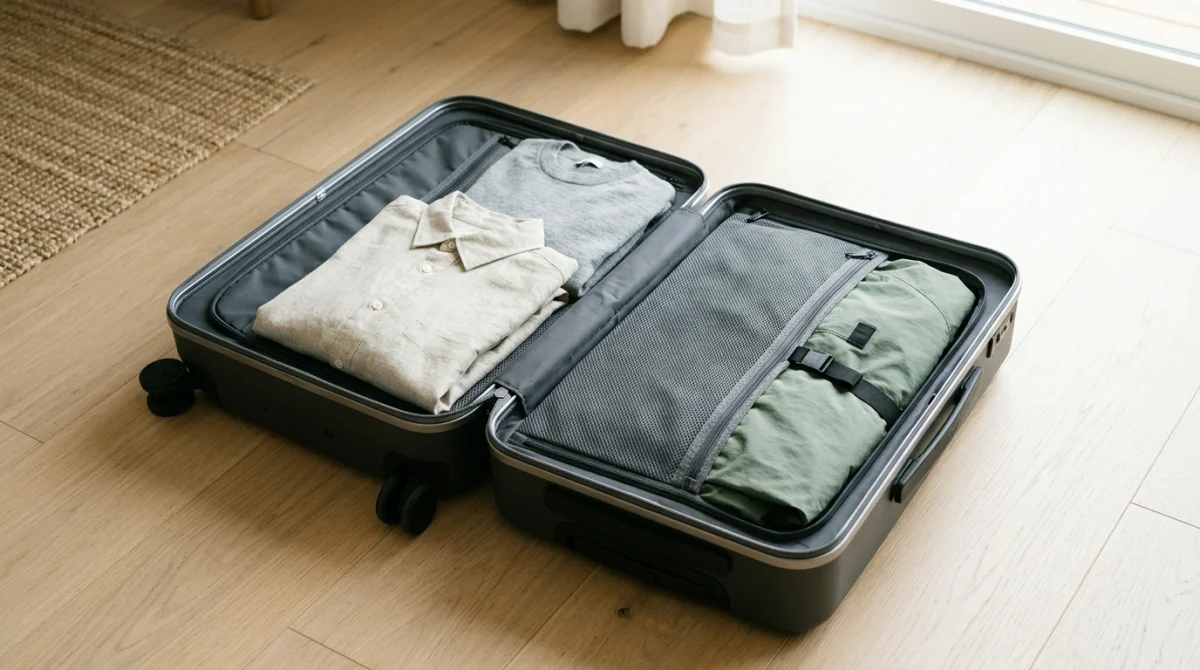
Regional hopper aircraft serving Pokhara, Bhadrapur, Bharatpur, or Jomsom tighten hand-carry cabin limits strictly around 5kg to 7kg. Instead of fighting bulging pockets at check-in counters:
- Wear your heaviest footwear and mid-layer jacket onto transit: Keeps soft sneakers and featherweight knits off cabin scale weight.
- Roll softer base tees tight inside medium compression cubes: Prevents crease fold lines while reclaiming nearly 25 percent more corners inside compact Stowell backpacks or Carryon cabin bags.
- Isolate tech bricks and leaks cleanly: Place toothpaste, liquids, GaN chargers, and a compact 20,000mAh power bank inside separate ripstop organizers right near top zipper access so mountain checkpoints stay hassle-free.
Adapting One Wardrobe Smoothly for City Workdays and Weekend Trails
The quiet genius of spending thoughtfully on neutral capsule staples across Urban Thread, Carryon, and Stowell lies in avoiding separate "travel clothes" sitting untouched in back closets eleven months out of twelve. A matte olive packable rain shell thrown comfortably over a structured navy tee works smoothly on Monday bicycle rides across Jhamsikhel offices just as well as Sunday misty hill viewpoints above Sarangkot. Choosing darker washed stretch chinos or articulated ripstop utility trousers equipped with discreet hidden zip pocket dividers protects wallets and apartment keys on crowded bus corridors while still pairing neatly with clean minimalist sneakers inside client meetings—cutting cluttered impulse clothes shopping dramatically over years.
Document Pockets, Rain Covers & Daypack Ergonomics
Once packed cleanly for road or mountain hops, never let laptop corners jab right into tired lower backs on bumpy three-hour bus stretches. Choose structured 24L to 32L Stowell or Carryon daypacks featuring firm EVA foam spinal channels, wide padded chest sternum clips that share shoulder strain seamlessly across brisk uphill climbs, and a zippered base waterproof rain cover sleeve tucked natively beneath bottom pockets. Slide critical dry electronics and passport envelopes cleanly inside internal top zippered mesh pockets facing away from outer crowds, keeping hands totally free without constantly swinging heavy shoulder slings awkwardly through busy terminal alleys.
Key Facts at a Glance
Bottom Line & Summary
Smart wardrobes work like modular hardware rather than cluttered seasonal closets. Stick to breathable 160–220 GSM natural blends checked carefully against seller shoulder measurements on Urban Thread, carry a featherweight windproof shell above your knit sweater instead of bulky overcoats, and pack inside light compression cubes and soft cabin bags from Carryon or Stowell on Kinzo so rapid shifts from sunny plains to crisp hill ridges feel effortless.