








Most city apartments around Kathmandu, Pokhara, and Biratnagar share a familiar challenge: landlords design kitchens for three square meters of slab and a double sink, then you try to fit pressure cookers, masala tins, dal-rice jars, morning tea kettles, and daily skillets without stacking everything six layers deep. When storage fails, dry lentils catch monsoon humidity inside unsealed bags, prep knives dull faster rattling in overcrowded drawers, and weeknight dinner takes twice as long just clearing counter space to chop onions.
Setting up a hardworking small kitchen on Kinzo—drawing from practical staples stocked across Home & Hearth, Vital Pantry, Kitchmate, Purevia, and Hearthly—has less to do with aesthetics and everything to do with moisture seals, heavy-gauge pan bottoms, and organizing tools strictly by prep frequency.
Key Takeaways
- Gasket-sealed glass or thick BPA-free jars pay for themselves during Ashar–Bhadra humidity: Once monsoon damp enters half-used basmati sacks or spice pouches, pantry weevils follow within weeks.
- Buy three versatile pans rather than a 12-piece boxed set: A heavy stainless pressure cooker or Dutch pot, one 24–26cm daily skillet, and an induction-compatible saucepan handle 95 percent of Nepali household cooking.
- Reserve the prime 60cm counter strip exclusively for daily workflow: Keep kettles, cooking oil, salt, and chopping boards out; move weekly appliances like waffle makers or blenders cleanly onto upper or lower racks.
- Verify lid material and replacement washers before checkout: Cheap thin plastic clips snap within months; silicone gasket seals and thicker stainless rims outlast flimsy latch kits.
Managing Monsoon Humidity and Grain Storage Reality
Anyone storing whole cumin, turmeric, suji, chana, or specialty dry teas through warm Nepali summers learns quickly that twist-ties and thin plastic bags are practically useless after one week of rain. Moisture migration ruins aroma first and invites pantry pests soon after. That makes airtight dry-goods canisters the highest-return purchase in your entire kitchen refresh.
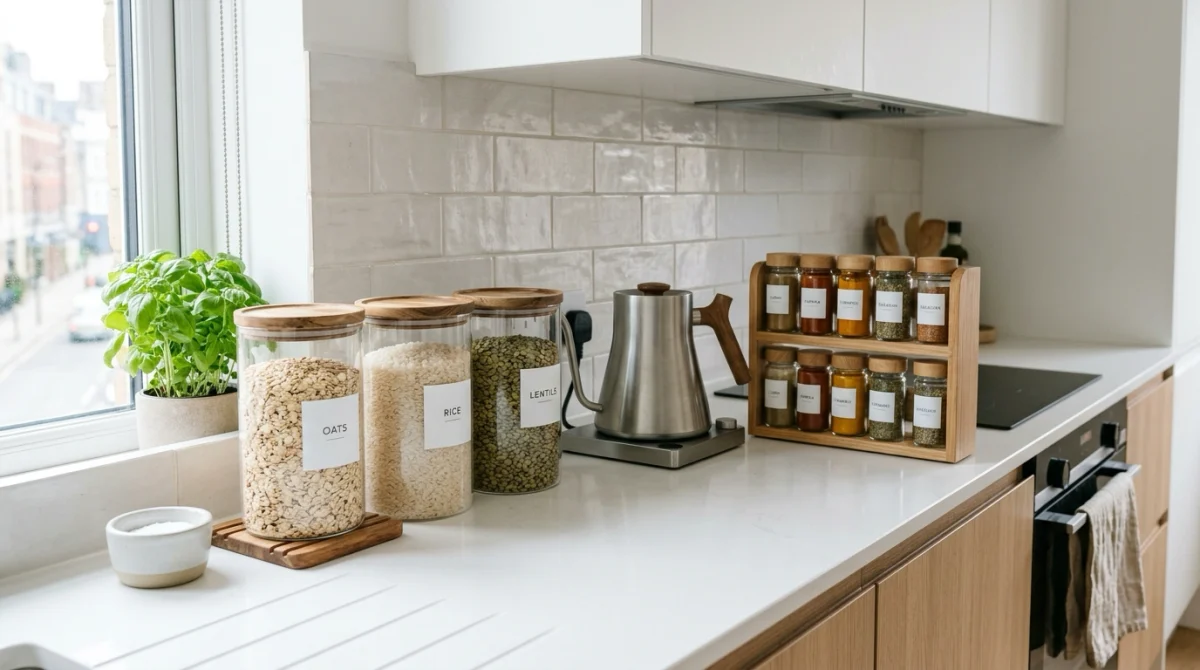
Transparent glass canisters topped with wide silicone-ring lids beat opaque tin boxes for everyday pantry stacks because you immediately see exact lentil levels before placing your weekly grocery basket on Vital Pantry. Reserve lightweight stackable food-grade polymers strictly for upper shelves above eye level where heavy glass drops could shatter on tile floors.
Sizing Containers Around Real Shopping Weights
Avoid buying ten identical tiny spice jars that force you to keep half-open refills stuffed awkwardly in plastic bags nearby. Match jar capacities directly to standard local pack sizes: 1.5L to 2L jars swallow full 1-kilogram lentil, beaten rice (chiura), or flour packets comfortably; 400ml to 500ml canisters keep whole spices clean right beside your stove zone.
Daily Cookware Choices: Tri-Ply Stainless, Cast Iron, and Non-Stick Compared
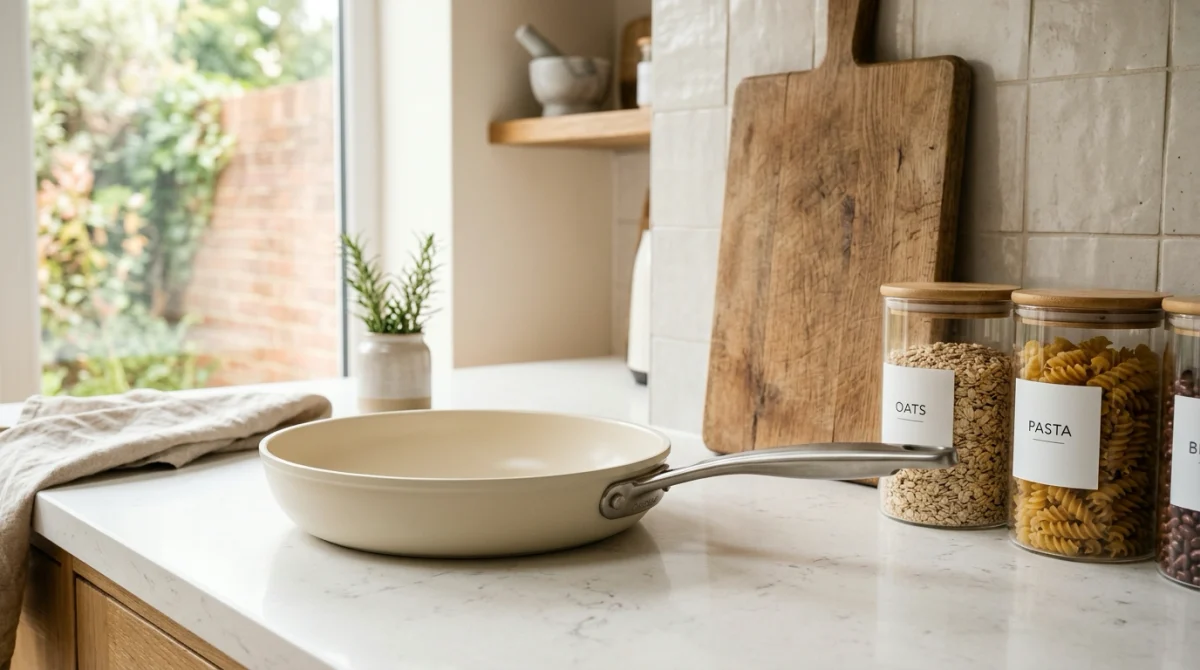
Whether cooking over LPG gas stoves or induction hotplates during electricity transitions, bottom thickness determines whether dal burns in the center while remaining lukewarm around pan edges. Paper-thin single-ply aluminum bends out of shape fast and hot-spots curries aggressively.
| Cookware Material | Heat Retention & Control | Best Everyday Role | Maintenance & Replacement Horizon |
|---|---|---|---|
| Tri-Ply Stainless Steel | Aluminum core spreads heat smoothly edge-to-edge | Daily dal fry, curries, boiling milk, induction compatibility | Virtually indestructible (10+ years); deglazes cleanly with warm soak |
| Seasoned Cast Iron | Very heavy thermal mass; sears cleanly | Rotis, paratha tawa, crispy roasting, oven bakes | Hand-dry immediately after wash & wipe thin oil sheen to stop rust |
| Ceramic / PTFE Coated Non-Stick | Fast warm-up; near-zero sticking with minimal oil | Omelettes, delicate pancakes, quick stir-fry | 2 to 3 years lifespan; avoid metal ladles & scorch-high empty preheat |
| Hard-Anodized Aluminum | Lightweight yet scratch-resistant vs bare aluminum | Deep kadhai frying, everyday sabzi batches | Long durability on gas; verify magnetic steel base if using induction |
Zone Planning Inside a Tight Three-Meter Slab
Efficiency in a compact kitchen comes from respecting three micro-zones so you stop pacing diagonally across drips every morning:
- Beverage & Breakfast Corner: Cluster your stainless electric kettle (like Hearthly / Kitchmate styles), coffee press, mugs, and tea canister near the wall socket farthest from sink splashes.
- Prep & Chop Strip: Keep one spacious wooden or thick resin cutting board, one sharp 7-inch chef’s knife plus a nimble paring blade, and a stainless scrap bowl right beside the sink basin. Ditch nine-knife spinning blocks packed with serrated filler blades you never touch.
- Hot Cooking Triangle: Store frequently grabbed bottles (mustard oil, soy, chili, everyday salt, turmeric) inside a shallow wipeable caddy directly under arm’s reach of the burner—keeping plastic bottle caps well away from rising gas heat plumes.

Practical Knife Hygiene and Prep Board Material Choices
Cutting tomatoes, wet leafy greens, and garlic across dull stainless blades on thin glass cutting slabs wastes prep energy and ruins knife edges inside two weeks. One sturdy 2cm-thick bamboo or solid acacia wood chopping block dedicated strictly to produce, paired with one lightweight slim poly board strictly for raw poultry or fish that drops straight into hot soapy water, keeps cross-contamination zero without filling sinks with clumsy plastic trays. Instead of storing knives loose inside noisy flat utensil drawers where blades clang constantly against spoons, line the narrow drawer slot with an inexpensive notched wooden divider or wall magnetic bar so sharp chef edges glide cleanly through dense carrots or ginger without dangerous slipping.
Gas vs Induction Transition Planning in Urban Kitchens
Many Valley apartments increasingly blend single-burner induction hobs alongside traditional two-burner LPG cylinders so evening dal-tarka or boiling kettle tea stays quiet and predictable whenever cylinder refills stall in heavy monsoon traffic. Before adding pans to your Kinzo cart from Kitchmate or Home & Hearth, test magnetic stick with a fridge magnet on existing steel utensils and double-check that every fresh saucepan lists flat magnetic base bonding alongside minimum base diameter (~12cm+) required by inductive coils—preventing frustrating `E0` coil-detection errors on morning coffee runs.
Evaluating Electric Kettles, Mixer Grinders, and Prep Appliances
When adding powered kitchen tools from Steamora, Hearthly, or Purevia, look closely at copper motor wattage ratings and cleanable seams rather than chrome trim panels. On morning electric kettles, concealed stainless heating bases outlast exposed spiral coils hands-down because mineral limescale from hard municipal water cleans off with one half-cup vinegar simmer instead of lodging beneath delicate rings.
For wet masala and smoothie grinders, prioritize solid locking stainless jars paired with 750W+ copper windings over fragile plastic gears—tough roasted spices, garlic-ginger pastes, and ice quickly strip weak lower couplers.
Weekly Pantry Audit and Refill Hygiene Without Waste
Organizing food jars fails if nobody finishes bottom stale flour before dumping fresh stock right on top. Whenever opening a new bulk lentil or dry fruit pouch delivered via Vital Pantry on Kinzo, finish tipping the tiny remaining bowl of old lentils out while wiping dry glass rims briefly with a clean kitchen towel before refilling completely—keeping zero stale remnants buried permanently on jar floors. Grouping breakfast oats, coffee beans, and chia onto one pull-out clear acrylic caddy, and separating wet sauces from dry grains across adjacent cabinet shelves stops sticky spills from ruining dry labels. Pair heavy spice pans cleanly alongside solid silicone trivet pads rather than resting scorching steel bottoms directly over delicate apartment laminate countertops.
Drainage Traps, Sink Strainers & Preventing Grease Clots
Small urban flats often share steep vertical gray-water stacks with four floors below—pouring hot pan oil straight down narrow kitchen sink outlets hardens fast inside cold winter pipes and triggers smelly plumbing backups right before guests arrive. Drop an inexpensive fine-mesh stainless sink catcher basket over drains cleanly, wipe leftover oil slicks first with dry folded kitchen paper ahead of soapy rinsing, and reserve a wide flat drying rack tray beside your dish strainer so water drips down straight back into the sink lip instead of pooling silently around wooden countertop seams and swelling cabinetry particleboard.
Key Facts at a Glance
Bottom Line & Summary
A peaceful apartment kitchen rarely requires knocking down walls—it takes ruthless pruning of unused novelty gadgets paired with durable daily staples. Lock out monsoon humidity with silicone-gasket glass storage containers, anchor your burner with heavy tri-ply stainless and cast iron supported by one sacrificial non-stick skillet, and zone every morning kettle and prep board cleanly across your Kinzo Home & Hearth or Vital Pantry haul.